
This post may contain affiliate links. Read more at our disclosure policy.
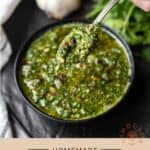


This easy homemade chimichurri sauce is made with fresh parsley, garlic, oregano, red wine vinegar, and olive oil, and comes together in about 5 minutes. We make chimichurri for our catering events all the time and serve it with grilled steak as an alternative to BBQ sauce (and it is always a hit!).
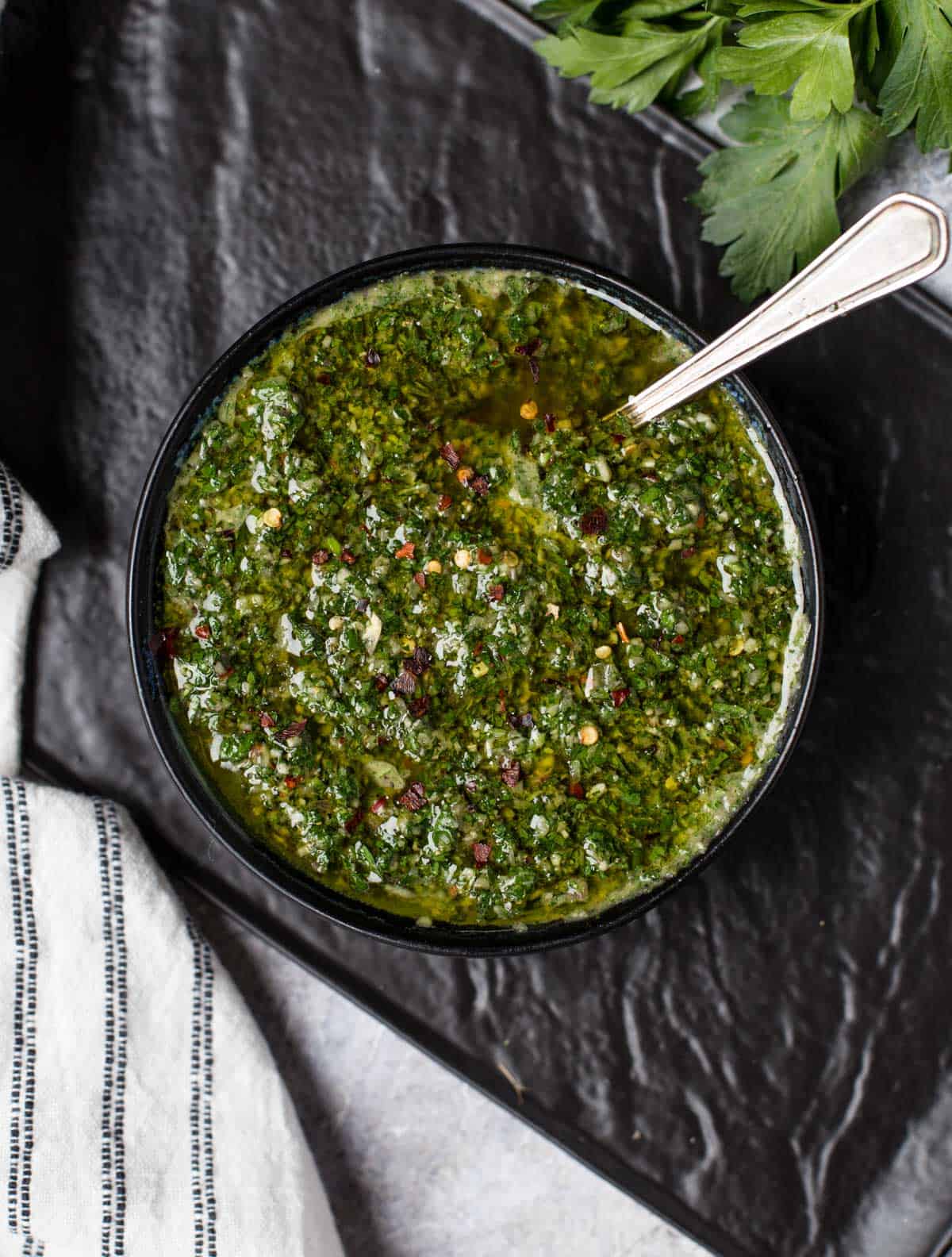
Bright, fresh, herby, and just a little spicy, this easy chimichurri recipe is one of my favorite ways to finish grilled or smoked meats. And don’t stop at steak! Chimichurri is fantastic with chicken, pork, fish, vegetables, and even as a salad dressing.
One of the most popular dishes we serve at our Ember & Vine catering events is Smoked Tri-Tip served with Chimichurri Sauce. It’s popular for a good reason. It’s damn delicious, that’s why!
Why You’ll Love This Chimichurri Sauce
- It takes about 5 minutes. The food processor does most of the work.
- It’s packed with fresh flavor. Fresh parsley, oregano, garlic, vinegar, and olive oil make a sauce that is bright, herbaceous, and tangy.
- It works with almost anything. Steak is the classic pairing in our kitchen, but we use it with chicken, pork, fish, vegetables, and more.
- It’s easy to customize. Adjust the red pepper flakes for more or less heat, or swap some of the parsley for cilantro if that’s your thing.
- It’s perfect for entertaining. We make large batches for Ember & Vine catering events, especially when we’re serving grilled meats to a crowd.
Table of Contents
What is Chimichurri?
Chimichurri is a fresh herb-based sauce from South America, most closely associated with Argentina and Uruguay. It is traditionally made with fresh herbs, garlic, vinegar, oil, and seasonings.
Think of it as a bright, herbaceous finishing sauce rather than a thick, creamy sauce. It has enough acidity and fresh herb flavor to wake up grilled meats without covering up the flavor of the meat itself.
That’s exactly why I love it with grilled steak.
It also isn’t pesto. While the two can look somewhat similar, chimichurri is made without nuts and has a much brighter, more acidic flavor.
Chimichurri Ingredients
The classic version is a mix of simple ingredients. The important part is making sure they are fresh ingredients.
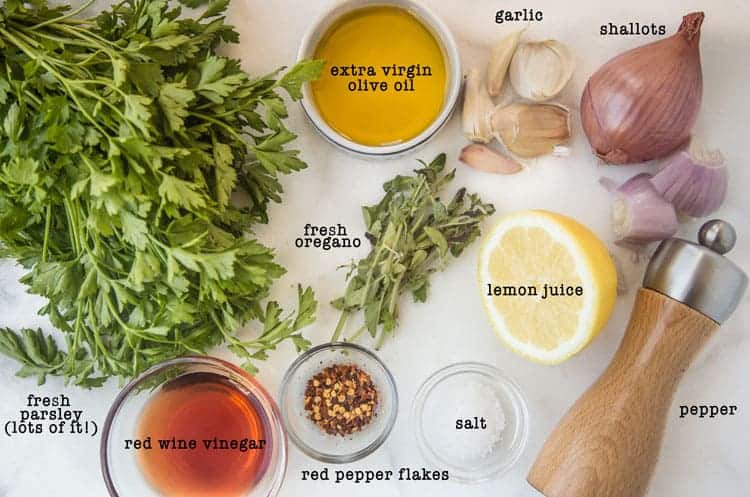
- Fresh Italian Parsley – Flat-leaf parsley gives the best texture and flavor. This is the main herb in the recipe.
- Garlic – Fresh garlic adds the savory bite that makes chimichurri so good.
- Shallot – You can substitute finely chopped red onion if that’s what you have.
- Fresh oregano – Fresh oregano gives the sauce a wonderful herbal quality. Dried oregano can work in a pinch.
- Red wine vinegar – This provides the acidity that balances the olive oil and fresh herbs.
- Lemon juice – Adds another layer of brightness.
- Red pepper flakes – This recipe has a mild amount of heat, but you can easily increase it by adding extra red pepper flakes.
- Extra virgin olive oil – Use a good olive oil because it makes up a large part of the finished sauce.
- Kosher salt and black pepper – Season to taste.
- Optional: You can add fresh cilantro if you like the flavor. Simply sub out some of the parsley for cilantro based on your personal preference.
How to Make Chimichurri Sauce in a Food Processor
There are certainly variations, but this is its most basic form. Traditionally you would hand chop everything and layer it together. But you can also can take a little help from the food processor (like I do for large catering events) and toss everything in to let it do it’s thang!
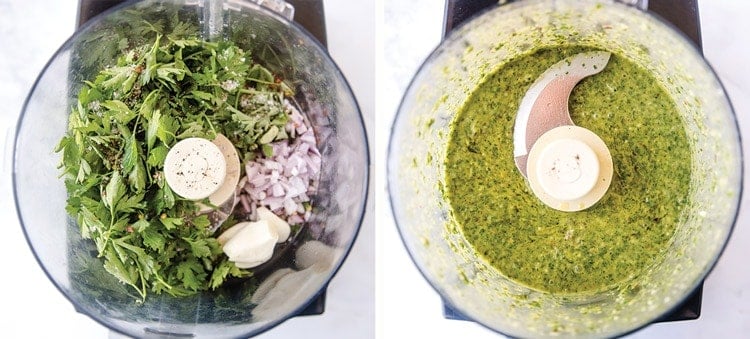
Food Processor Method
- Add the herbs and aromatics. Add the parsley, garlic, shallot, oregano, red pepper flakes, salt, pepper, lemon juice, and red wine vinegar to a food processor.
- Pulse. Pulse several times until the ingredients are finely chopped and combined. Don’t puree the mixture.
- Add the olive oil. Slowly add ½ cup of olive oil and pulse a few more times.
- Adjust the consistency. Add more olive oil as needed until you reach your preferred consistency. The finished chimichurri should be spoonable but still have visible bits of fresh herbs.
- Taste and adjust. Add more salt, vinegar, red pepper flakes, or olive oil to suit your taste.
Tip: If you want that classic hand chopped look, but still want a shortcut, pulse all of the dry ingredients in the food processor, then transfer to a bowl and slowly mix in the wet ingredients.
How to Make Chimichurri Without a Food Processor
If you prefer a chunkier chimichurri or don’t have a food processor, you can easily make this by hand.
- Finely chop the parsley, garlic, shallot, and oregano and add them to a bowl.
- Add the salt, pepper, and red pepper flakes.
- Stir in the lemon juice and red wine vinegar.
- Slowly add the olive oil, stirring as you go.
- Stop adding oil when the chimichurri reaches the consistency you like.
Would you like to save this?
The hand-chopped version will have a little more texture, which is exactly what some people prefer.
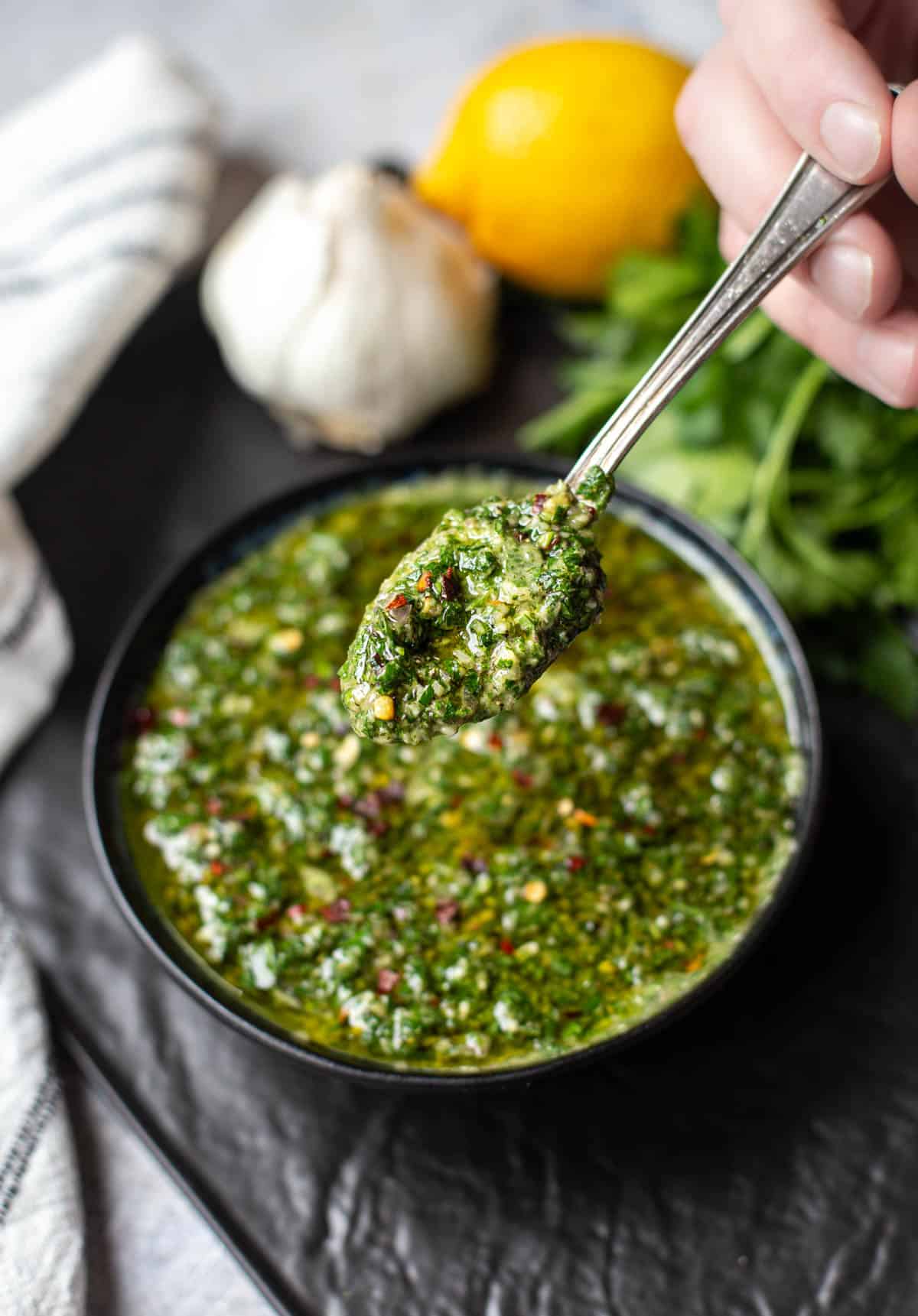
What to Serve With Chimichurri Sauce
Chimichurri is one of those sauces I always want in the refrigerator during grilling season.
Try it with:
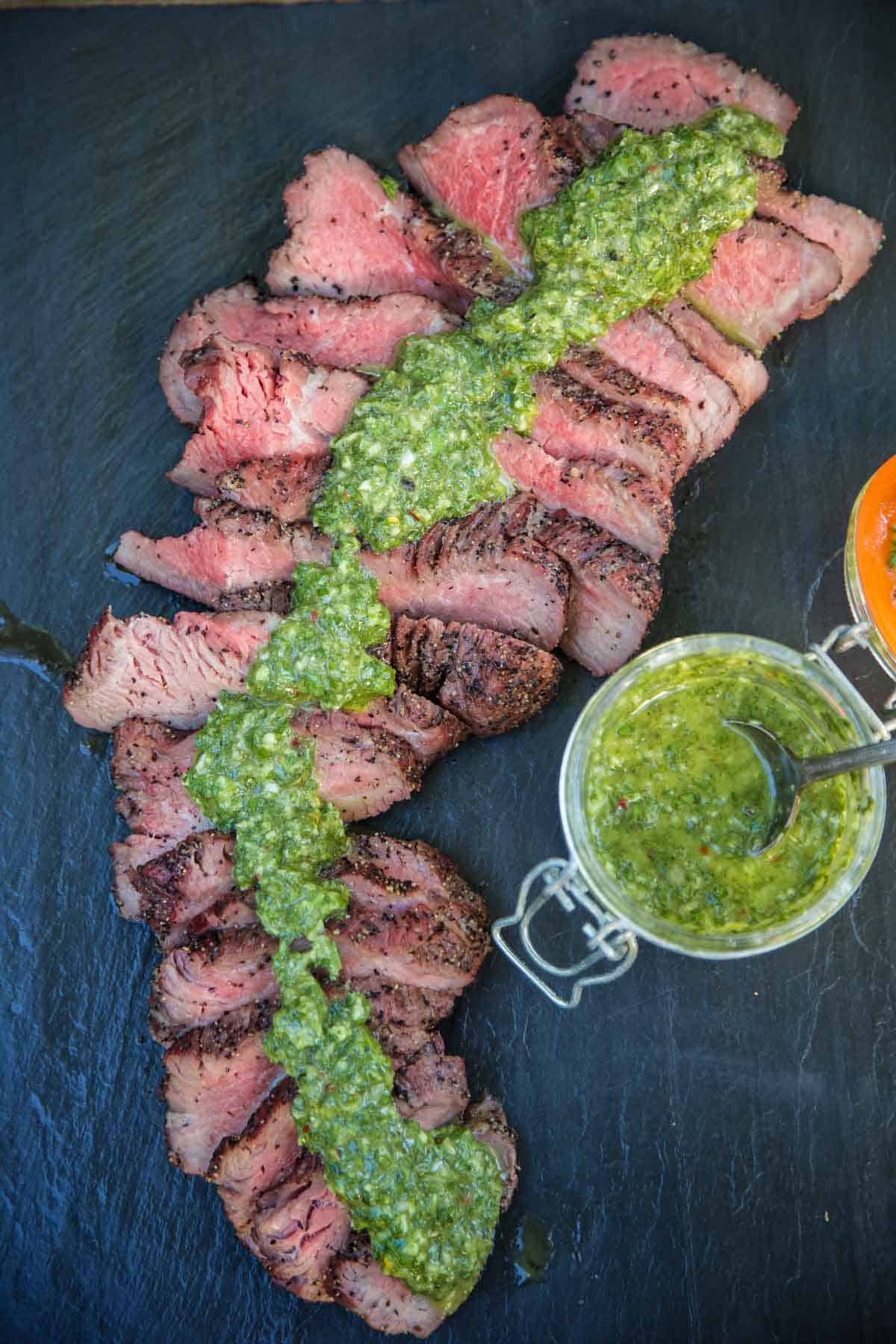
- Grilled steak of any kind
- Picanha Steak
- Smoked beef, especially Smoked Tri Tip
- Grilled Chicken
- Grilled Fish (great on Cod) or with shrimp skewers
- Reverse Seared Pork Chops
- Grilled Vegetables
- Salads
- Scrambled eggs
- And so much more (I’m not kidding about the scrambled eggs)
How to Store Chimichurri Sauce
Store chimichurri in a sealed glass container in the refrigerator for up to 2 weeks.
Because the olive oil can solidify when chilled, the sauce may look thicker or harder when you first pull it from the refrigerator. Let it sit at room temperature for several minutes and give it a good stir before serving.
Frequently Asked Questions
No, not necessarily. This recipe uses a small amount of red pepper flakes, so it has a mild amount of heat. You can add more if you want a spicier sauce or leave them out for a milder version.
Heaven. Seriously! Chimichurri is fresh, herbaceous, garlicky, tangy, with an ever so slight spice. The vinegar and lemon juice give it acidity, while the olive oil rounds everything out. It’s so good!
Yes, absolutely! In fact, making it ahead is a great idea. Store it covered in the refrigerator and bring it to room temperature before serving.
Definitely not. Steak may be the classic pairing, but chimichurri works beautifully with chicken, pork, fish, shrimp, vegetables, and salads.
Yes, you sure can! Simply finely chop the herbs, garlic, shallot, and oregano by hand and mix everything together in a bowl.
A Note From My Kitchen
I’ve made a lot of chimichurri over the years. From backyard dinners to large catering events. And the thing I love most about it is how little you have to do to make a great sauce.
Fresh herbs, good olive oil, garlic, vinegar, and a little heat are really all you need. Boom!
And if you’re standing next to a hot grill with a perfectly cooked steak, this is the sauce I want sitting right next to me.
About Vindulge
Mary (a certified sommelier and recipe developer) and Sean (backyard pitmaster) are co-authors of the critically acclaimed cookbooks — Fire + Wine and Fire + Wine Backyard Pizza — and have been creating content for the IACP-nominated website Vindulge since 2009. They live in Oregon on a farm just outside Portland.
*This recipe was originally written in 2014, and updated with new pictures and content. The recipe remains the same.
If you like this recipe we’d truly appreciate it if you would give this recipe a star review! And if you share any of your pics on Instagram use the hashtag #vindulge. We LOVE to see it when you cook our recipes.
Easy Chimichurri Sauce Recipe
Ingredients
- 2 cups fresh Italian parsley, loosely packed
- 5 cloves garlic, peeled and smashed
- 2 tablespoons shallots, roughly chopped
- 2 tablespoons red wine vinegar
- ½ lemon juiced (about 2 tablespoons)
- 1 tablespoon fresh oregano, chopped, (dry works okay too, but fresh is more fragrant)
- 1 teaspoon salt
- ½ teaspoon pepper
- ½ teaspoon red chili pepper flakes
- ½ – ¾ cup extra virgin olive oil
Instructions
- Place all ingredients (except olive oil) in the food processor and pulse a few times until everything starts to break up.
- Start slowly adding the olive oil. Start with just ½ cup, and then slowly add more and pulse a few more times. Don't puree; just a few pulses will do. If it’s too thick, add more olive oil until you get to your desired consistency.
- Serve over grilled or smoked beef, chicken, pork, fish, and even vegetables.
Video
Notes
- Prepare a large bowl. Start by hand chopping the parsley, garlic, shallots, and oregano and add to the bowl. Then add the salt, pepper, and red chili pepper flakes.
- Add the lemon juice and red wine vinegar. Stir, then slowly stir in the olive oil until you get your desired texture. You don’t want too much oil, as it will become too wet. Stop adding oil when the consistency becomes paste-like.
Nutrition
Nutrition information is automatically calculated, so should only be used as an approximation.





















Turned out so perfect! I made it to go with some simple steak and baked potatoes and I wanted to put it on everything! I thought the garlic would be too much but it’s perfect!
I’m so happy to hear this! Cheers 🙂
Finally, somebody does “the original chimichurri” with “parsley” and no jalapeno pepper.
Cilantro was never used in Argentina till recently when a substantial inflow of immigrants from Peru, Bolivia, and other neighboring countries in which cuisine is prevalent the use of it.
This was so easy and super delicious. I made this to put over the top of another recipe I found on here (Grilled Cod with Chimchurri). For that recipe, I swapped the cod for Chilean Seas bass. The chimichurri sauce was an outstanding final touch to the meal. Pro tip: We paired Sea Bass w/ chimichurri with the Prosecco Risotto recipe (also from this blog). It was a restaurant quality meal! Perfect way to spend a weekend in cooking with friends.
Loved this recipe!- perfect for my steak and potatoes!
Can I sub the red wine vinegar ?
You can sub with any acid really. White wine vinegar, apple cider vinegar. It adds a tang. If you don’t like vinegar in general then play with the lemon juice portions and salt.
How long can this be stored for? Can larger batches be made and frozen?
In the refrigerator we have used it up to two weeks. As it cools the oil hardens preventing oxidation, so it helps preserve. For the freezer it will last up to three months. I would not overfill the container giving room for it to expand. As it warms up the texture will liquify again.
I actually dont have a food processor… did you say something about layering this recipe when hand-chopped? If so, how is this done? Thank you!
We just updated the article and recipe for steps to chop it up.
Everyone in my family loved it!