Easy Smoked Corned Beef Brisket Recipe – Step By Step Perfection

Mar 16, 2021, Updated Feb 26, 2025
This post may contain affiliate links. Read more at our disclosure policy.
Smoked Corned Beef Brisket is an absolutely delicious meal. And if you’re going to make corned beef from scratch, this is how you do it. A 7-day homemade cure, bold corning spices, and a slow smoke that transforms brisket into something unforgettable.
Yes, it takes time. And yes, it’s absolutely worth it!
If you have a pre-brined cut of beef, make sure to check out our Smoked Corned Beef Round recipe first.
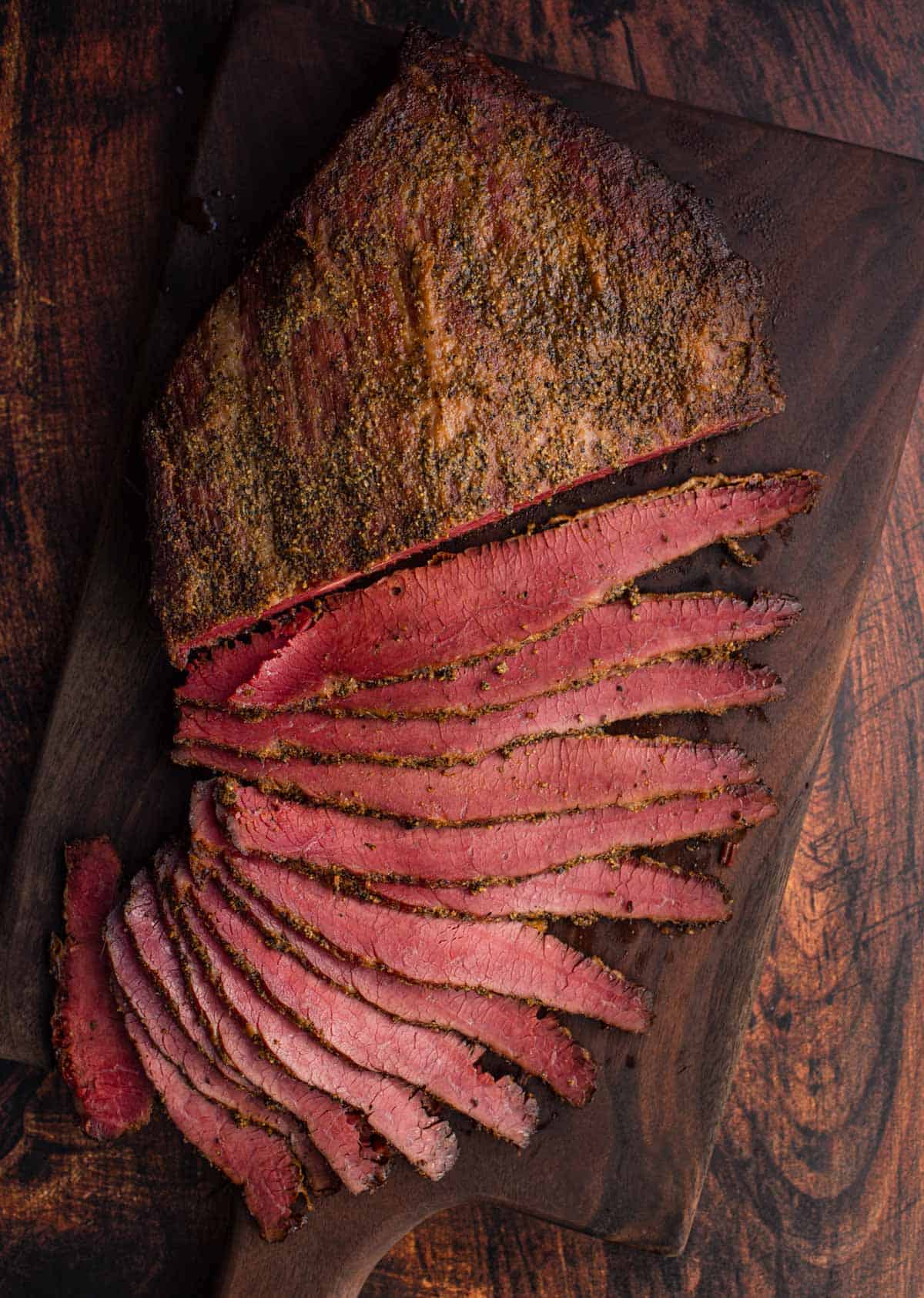
Making your own smoked corned beef brisket means you control everything — the salt level, the spice blend, and the final smoky finish. Instead of relying on a packaged brine, this method walks you through building a balanced curing solution from scratch using Prague Powder #1, aromatics, and a simple brisket flat. The result is deeply flavorful, sliceable beef with a subtle smoke profile and that signature rosy color.
It’s great for a crowd and perfect for leftover dishes like Corned Beef Hash or Corned Beef Sandwiches.
Don’t have 7 days? That’s okay, we’ve included a bonus tip to speed up the brining process.
Table of Contents
- Why Make Corned Beef From Scratch?
- What is Corned Beef
- Ingredients for Smoked Corned Beef Brisket
- Understanding the Cure (Important)
- How To Make Smoked Corned Beef Brisket Cure
- Tip – How to Speed Up The Brine
- How to Smoke Corned Beef Brisket
- Frequently Asked Questions
- What to Serve with Smoked Corned Beef
- Tools Used
- Smoked Corned Beef Brisket Recipe
Why Make Corned Beef From Scratch?
- Control salt levels
- Customize your corning spices
- No mystery seasoning packets
- Better smoke flavor absorption
- Can easily convert it into pastrami
If you’ve only ever used store-bought corned beef, this will completely change your expectations.
What is Corned Beef
Corned Beef is a salt-cured beef cut that has soaked in a wet curing brine (versus dry brine) for several days. The distinctive red color comes from a specific ingredient — Prague powder 1 — plus the mix of salt, herbs, and spices giving a distinctive aromatic and salty flavor.
While the root word evolved from German, referencing “small seeds” (like those used in corning spices), the English made corning more popular as a phrase referencing large rock salts used for curing. The Irish then continued with the popularity as English influence in Irish cuisine evolved. Irish immigrants brought the dish to America where it is traditionally enjoyed boiled with cabbage, corning spices, and vegetables.
Our smoked corned beef brisket recipe is our favorite way to add smoky flavor to the more traditional oven-baked versions.
Ingredients for Smoked Corned Beef Brisket
This recipe is built around a 5-pound brisket flat and 4 quarts of water to keep curing ratios accurate.
For the corned beef spices, we’re using a combination of sugar, salt, herbs, and spices to provide a balanced yet very aromatic flavor.
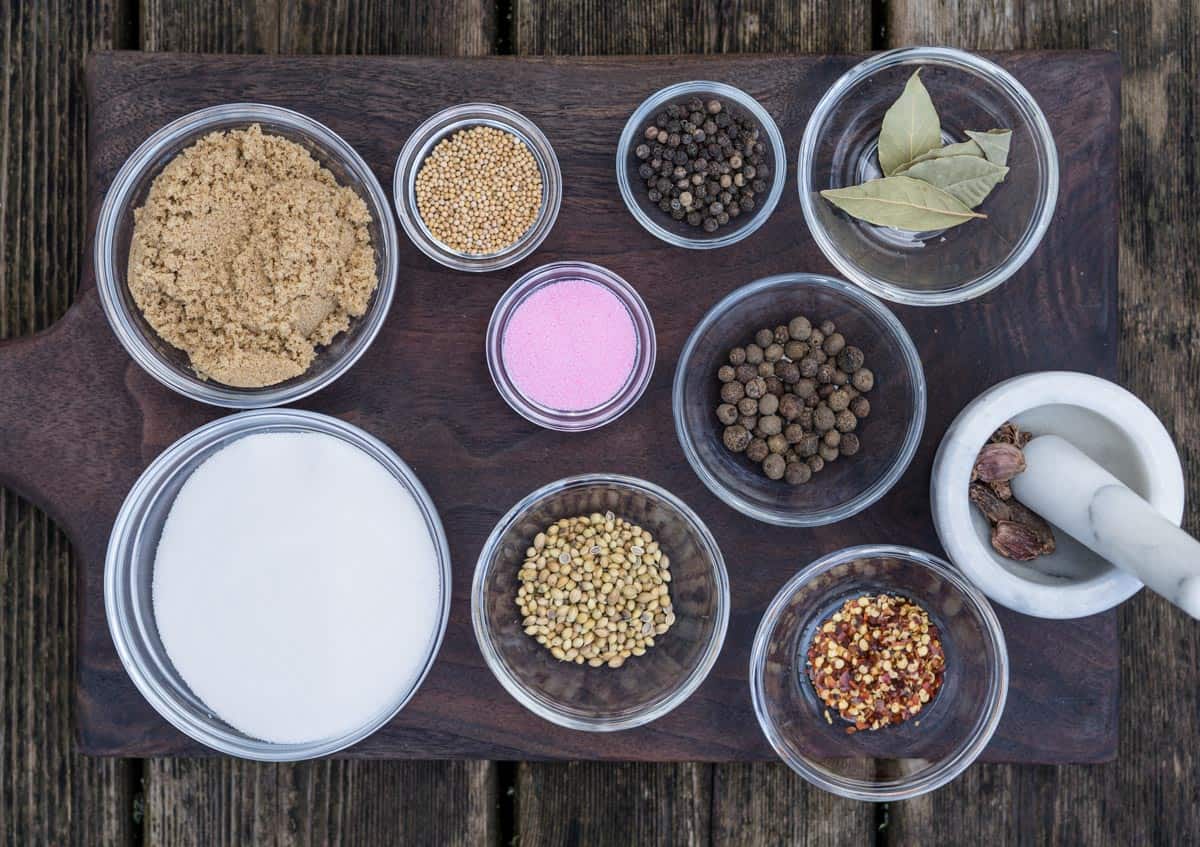
- Brisket – We’re using a 5-pound brisket flat (trimmed). The flat will brine more evenly versus using a whole brisket, which would take much longer. When calculating the brine, use a 5-pound flat so the ratio of curing salt to water stays in balance.
- Water – We use 4 quarts as it makes the ratio for the curing salt easier with a 5-pound Brisket Flat.
- Salts – Kosher Salt and Prague Powder 1
- Brown Sugar – You can use dark or light brown sugar. You can also use cane sugar if you prefer. The brown sugar just adds a touch of the molasses element.
- Aromatics – Mustard Seed, Coriander Seed, Cardamom Pods, Bay Leaves
- Heat – Whole Black Peppercorns, Red Chili Pepper Flakes
For Smoking
- Mild brisket rub (low salt recommended)
- Wood: apple, cherry, oak, or hickory
Understanding the Cure (Important)
Corned beef is a wet cure, meaning the meat soaks in a seasoned salt solution for several days.
The distinctive pink color and preserved texture come from Prague Powder #1 (curing salt). This is not optional for proper curing and food safety.
Do not substitute Prague Powder #2.
#1 is for wet curing and shorter curing periods.
#2 is for dry curing and long-term preservation.
For this 5-pound brisket + 4 quarts water ratio, use 2 level teaspoons of Prague Powder #1. Accuracy matters.
Brining is a form of a “wet cure” used to add flavor and preserve foods. In this recipe we use Prague Powder #1, a curing salt, with kosher salt, and pickling spices. Osmosis kicks in and the salt from the brine and flavors infuses with the cells of the meat to add flavor and moisture.
Note that you should NOT substitute Prague Powder 2 for 1.
How To Make Smoked Corned Beef Brisket Cure
As we mentioned, curing corned beef just takes time. It is not overly complicated.
- Make The Brine – In a large stockpot, add the 4 quarts of water. To the water, add sugar and salts. Stir until the solids incorporate into the water. Next, add the remaining Corning Seasonings.
- Boil – Bring to a boil, then immediately turn off the burner. Stir the brine to incorporate the flavor from the spices. The heat helps the aromatics escape the seeds and spices versus leaving the water cool. At this point, cool in the refrigerator until the temperature of the water is under 45 degrees F.
- Trim the Brisket – While the brine cools, trim excess fat and silver skin from the brisket flat. Leave a thin fat layer intact.
- Brine (7 days) – Once the brine is cool, place the brisket into the stock pot or a large container. You do not want to place the meat into a warm brine (to prevent food-borne bacterial growth). Store in the refrigerator for 7 days while it brines.
- Rotate – Once a day remove the brisket from the pot, and flip it over, and then re-submerge. This flipping allows a more even cure. If the brisket floats, consider adding something heavy to it to weigh it down.
- Rinse – After 7 days, remove the cured brisket from the brine. Rinse the meat of excess brine under cold water and pat dry with a paper towel. Discard the brine. Now it’s time to season and then smoke it.
Tip – How to Speed Up The Brine
If you are trying to make this in less than 5 days, you need to inject the meat with the brine, and then place it in the brining solution. This allows the brine to work from both the inside and outside. Inject the meat in 1-inch cubes using the brine to help incorporate the cure faster.
How to Smoke Corned Beef Brisket
- Preheat Smoker: Prepare the smoker targeting 250 degrees Fahrenheit using a fruit wood like apple or cherry. Oak and hickory are good options if you want a more pronounced smoke flavor.
- Season: Season the rinsed and dried brisket with the Brisket Rub. We go light on the rub because there is already a good amount of salt from the brine. If you have any aversion to salt, consider a rub that is salt-free or low salt.
- Smoke: Place the seasoned cured brisket on the smoker, fat cap side down. Insert a meat thermometer probe into the beef and smoke, unwrapped. You will smoke the brisket until the internal temperature of the beef reaches 200-203 degrees F, or when the meat thermometer easily inserts into the meat with little resistance. *Plan roughly one hour per pound.
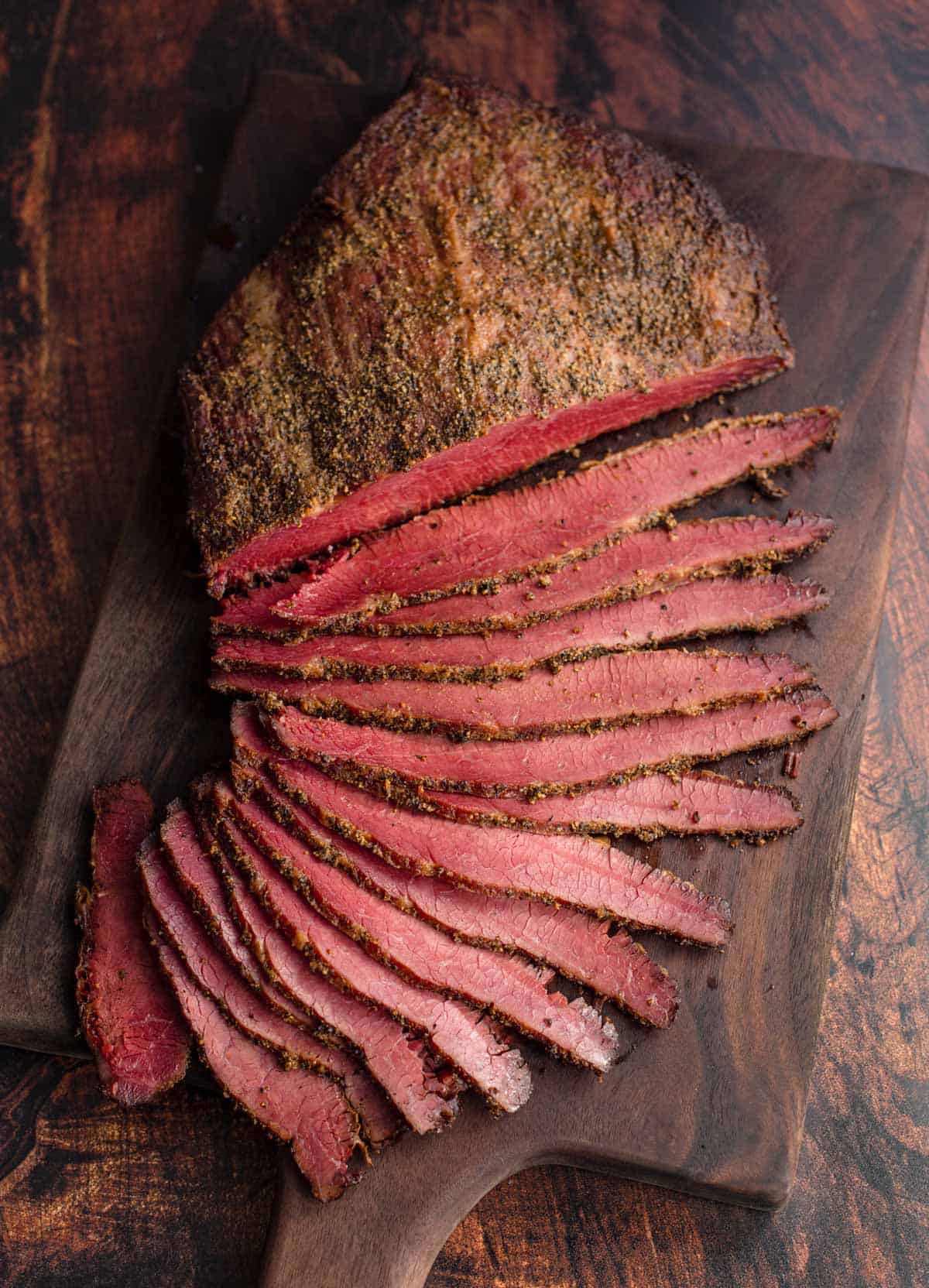
- Remove/Rest: Once it reaches 200 degrees, remove the brisket from the smoker, wrap it in foil or butcher paper, and let it rest for a minimum of 30 minutes (up to an hour). Slice against the grain to serve.
Would you like to save this?
Pin this now to remember it later
Pin ItFrequently Asked Questions
At 250°F, plan roughly 1 hour per pound. Always cook to 200–203°F internal temperature for proper tenderness.
Up to a point. As connective tissue breaks down, brisket becomes tender. But overcooking can cause it to dry out and crumble. Pull when probe-tender.
Not exactly. Pastrami uses a heavier black pepper and coriander crust and is traditionally steamed after smoking. This recipe can easily be adapted into pastrami by adjusting the rub and adding a steam finish.
Wrap tightly in foil and warm in a 350°F oven for about 12–15 minutes. Add a splash of beef stock if reheating larger pieces to prevent drying.
Wrap it and hold in a dry cooler (with NO ice) for up to 4 hours. It will stay warm and continue tenderizing slightly.
While this recipe calls for 7-days of curing time, you can reduce that to 4 to 5 days by injecting the brisket with a syringe and curing in the pot. Inject the brisket flat in multiple places with the brine. Then place the injected brisket back in the pot with the remaining brine and rotate every day as instructed. It should be fully cured within 5 days.
What to Serve with Smoked Corned Beef
Build a full St. Patrick’s Day meal with:
- Horseradish Mashed Potatoes
- Grilled Cabbage
- Duck Fat Potatoes
- Parsnip Puree
- Grilled Carrots
For leftovers, you’ve gotta try this Corned Beef Hash or Corned Beef Sandwiches!!
Tools Used
- Large stockpot
- Food-safe container for brining
- Meat injector (optional)
- Smoker (pellet, offset, or kettle)
- Probe thermometer
- Sharp slicing knife
Get a signed copy of our cookbook! Order Now
Tried this recipe? Give us a star rating and we would love to see! Mention @vindulge or use the hashtag #vindulge on all the social media handles. And consider subscribing to our newsletter where we drop all our favorite ideas and inspirations weekly.
Smoked Corned Beef Brisket Recipe
Ingredients
- 5 pound Brisket Flat, (trimmed of excess fat)
- 3 tablespoons Brisket Rub
Corning Spices
- 4 quarts water
- 1 cup kosher salt
- ½ cup brown sugar, (dark or light will work, as will cane sugar if that is all you have)
- 2 teaspoons Prague Powder 1, (otherwise known as pink curing salt. Do not use Prague Powder 2)
- 1 tablespoon whole allspice berries
- 1 tablespoon whole mustard seed
- 1 tablespoon coriander seeds
- 1 tablespoon whole black peppercorns
- 1 teaspoon red chili pepper flakes
- 6 large cardamom pods, crushed
- 4 bay leaves, crushed
Instructions
Prepare Brisket and Brine
- Make The Brine – In a large stockpot, add the water. To the water, add sugar and salts. Stir until the solids incorporate into the water. Finally, add the remaining Corning Spice ingredients.
- Boil – Bring to a boil, then turn off the burner. Stir the brine to incorporate the flavor from the spices. The heat helps the aromatics escape the seeds and spices versus leaving the water cool. At this point cool the brine down to room temperature (or use the refrigerator to speed up the cooling).
- Trim – While the brine cools, this is a good time to trim the brisket of any silver skin or excess fat.
- Brine – Once the brine is cool, place the brisket into the stock pot and secure the lid. Place the pot in the refrigerator to cure for 7 days. (see notes to speed up the process)
- Rotate – Each day remove the brisket from the pot and flip it over, then re-submerge the meat. This flipping allows a more even cure. If the brisket floats, consider adding something heavy to the brisket to weigh it down. Return to the refrigerator.
- Rinse – After 7 days, remove the brisket from the brine. Rinse the brisket of excess brine and pat dry with a paper towel. Discard the brine. Now it’s time to smoke it.
How to Smoke Corned Beef
- Preheat Smoker – Prepare the smoker targeting 250 degrees Fahrenheit using a fruit wood like apple or cherry. Oak and hickory are good options if you want a more pronounced smoke flavor.
- Season – Season the rinsed and dried brisket with the Brisket Seasoning. We go light on the rub because there is already salt in the brine. If you have any aversion to salt, consider a rub that is salt-free or low salt.
- Smoke – Place the seasoned brisket on the smoker, fat cap side down. Insert a meat thermometer probe into the flat (if you have one) and smoke, unwrapped. Smoke the brisket until the internal temperature reaches 200 degrees F, or when the meat thermometer easily inserts into the meat with little resistance. (Plan roughly one hour per pound)
- Rest and Serve – Once it reaches 200 degrees, remove the brisket from the smoker, wrap it in foil or butcher paper, and let it rest for 30 minutes. Next, place it in a cooler with no ice for one hour. Remove the Corned Beef Brisket from the cooler and then slice against the grain to serve.
Video
Notes
Nutrition
Nutrition information is automatically calculated, so should only be used as an approximation.